
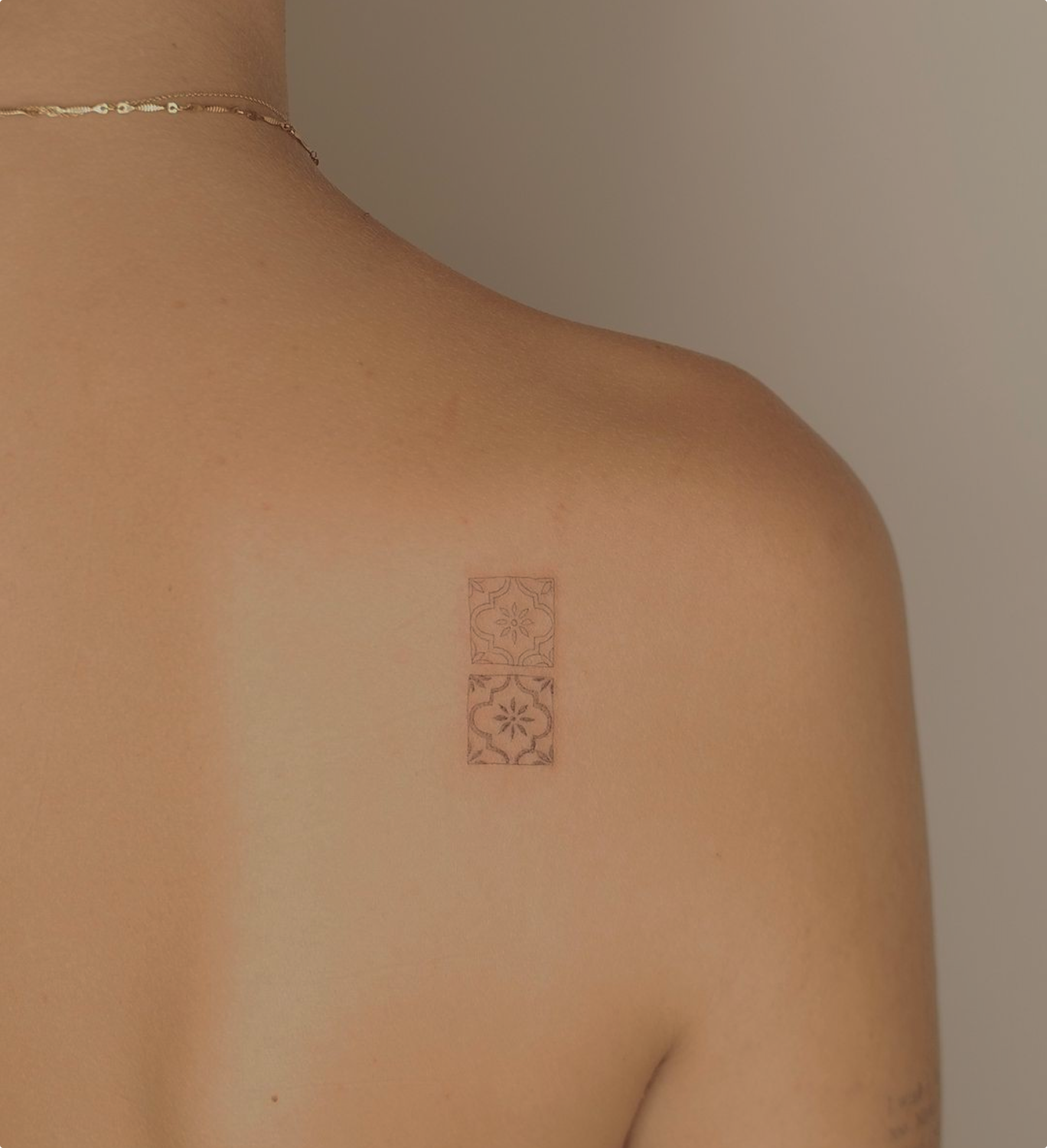
Objects appear ordinary because we live with them every day.
A chair, a mattress, a suit, a desk; these objects rarely demand attention. They simply exist within the background of daily life. Yet in contemporary art, objects often carry meanings far beyond their function.
In Roy’s contemporary fine art practice, objects are not treated as decorative symbols or narrative props. They operate as systems. Each object quietly organizes behavior, posture, intimacy, and labor.
What appears neutral often contains structure.
Through painting, sculpture, and conceptual tattoo art, Roy investigates how everyday objects shape the way bodies move, work, rest, and relate to one another.
“ In this section, you can describe your services or products in a way that feels effortless. Focus on outcomes, not features. Replace industry jargon with simple, visuceinto shorenever possible — people trust sn feature rotating quotes or a static grid, depending on your layout. Keep this part emotionally resonant.”
Objects are designed to serve practical purposes, but use is rarely neutral.
A desk determines how the spine bends during work.
A uniform signals hierarchy and institutional identity.
A mattress defines how bodies rest and share space.
Over time, repeated interaction with objects creates behavioral patterns. Function becomes expectation, and expectation slowly becomes structure.
In Roy’s work, these objects are repositioned so their hidden influence becomes visible. A familiar form may appear slightly enlarged, isolated, or subtly distorted. What once felt passive begins to reveal its authority.
Rather than dramatizing conflict, the work examines how compliance can feel natural — even elegant.
Labor often disappears in finished environments.
The modern world values efficiency, smooth surfaces, and seamless design. Yet traces of labor remain embedded in materials.
In Roy’s paintings and sculptural works, worn textures, creased fabric, and softened edges are rendered with deliberate precision. These details are not aesthetic decoration. They function as records of repetition.
Labor leaves marks.
Those marks become texture. Over time, texture becomes memory.
The work quietly raises a question:
At what point does adaptation become submission?
Intimacy is often described as emotional or relational. Roy approaches it as spatial organization. Domestic objects determine proximity between bodies. Beds, chairs, garments, and architectural interiors shape how people lean, rest, fold, or conceal themselves.
In Roy’s large-scale paintings and conceptual compositions, these objects appear familiar yet slightly estranged. A mattress edge may sag beneath invisible weight. Fabric gathers where a body once pressed but is no longer present.
Nothing dramatic occurs and yet absence becomes instructive.
Intimacy is not simply softness, It is also structure. It organizes comfort, defines acceptable closeness, and establishes behavioral boundaries.
Within this framework, satire emerges through restraint rather than exaggeration.
Dependence rarely presents itself as force. More often, it appears as convenience.
Modern life is organized through objects — furniture, clothing, digital interfaces, and architectural systems. The more seamlessly these objects integrate into daily routines, the less visible their influence becomes.
Roy’s practice examines this seamlessness.
Across mediums — from contemporary oil painting to sculptural structures and permanent tattoo compositions — the work explores how permanence alters perception. When an object is removed from background function and placed into an artistic context, it demands attention.
What once felt invisible becomes present. And that presence introduces unease.
Roy’s practice moves fluidly between painting, sculpture, and conceptual tattoo art. Rather than treating these mediums as separate disciplines, each becomes a continuation of the same investigation.
In painting, realism establishes familiarity before subtle intervention destabilizes it.
In sculptural work, physical structure mirrors psychological systems such as balance, endurance, and compression.
In conceptual tattoo art, permanence intensifies meaning. The body becomes both surface and archive. What is carried cannot be ignored.
Across all mediums, objects are never aesthetic filler. They function as infrastructure; shaping behavior long before we begin to question them.
Roy’s work does not rely on spectacle. Instead, it slows perception. A viewer encounters an object that appears ordinary and gradually begins to recognize the systems embedded within it.
This is where satire operates.
Not as humor, but as clarity.
Objects organize behavior.
Objects outlive intention.
Objects shape the systems we inhabit.
And in contemporary art, revealing those systems often begins with the most familiar forms.
Roy’s contemporary fine art practice spans painting, sculpture, and conceptual tattoo art, examining permanence, labor, intimacy, and normalization across mediums.
Selected works and commission inquiries are available through the studio.